Why More Ogden Homeowners Are Ditching Swamp Coolers for AC
Why More Ogden Homeowners Are Ditching Swamp Coolers for AC
Across Weber County, more property owners searching for air conditioning service Ogden UT are moving away from rooftop swamp coolers and toward central air. That shift is easy to understand on the ground in Ogden. Summer heat along the valley floor feels different than it did twenty years ago, smoke season now affects indoor comfort for weeks at a time, and many homes in 84401, 84403, 84404, and 84405 need cooling that works with closed windows, cleaner indoor air, and more stable room temperatures from morning through late evening.
In neighborhoods near Historic 25th Street, around Weber State University, out toward West Haven, and east toward the Ogden Bench, swamp coolers still sit on many roofs. They have been part of Northern Utah housing for decades because they were cheap to run and simple to install. In the right weather, they can still move a lot of air. The problem is that Ogden homes are no longer judged only by whether air is moving through the house. Homeowners now expect lower indoor humidity swings, better filtration during inversion and wildfire periods, quieter operation, and dependable cooling even when outdoor conditions are hot, dry, windy, or smoky.
That is why air conditioning service Ogden UT has become a common next step for people replacing aging evaporative systems. In local terms, the question is rarely whether a swamp cooler can still blow cool air on a mild June afternoon. The real question is whether it still fits how people live in Roy, Riverdale, North Ogden, South Ogden, Washington Terrace, Layton, Clearfield, and Huntsville. For many households, the answer is no.
What changed in Ogden homes
Swamp coolers were built around open-window cooling. That works by pulling hot outdoor air through wet pads so evaporation lowers the air temperature before it enters the house. It is simple physics, and in dry climates it can feel pleasant. It also means a home must stay partly open while the system runs. Windows need to be cracked. Outdoor dust can enter. Smoke can enter. Pollen can enter. Room-to-room balance depends heavily on window position, house layout, and wind.
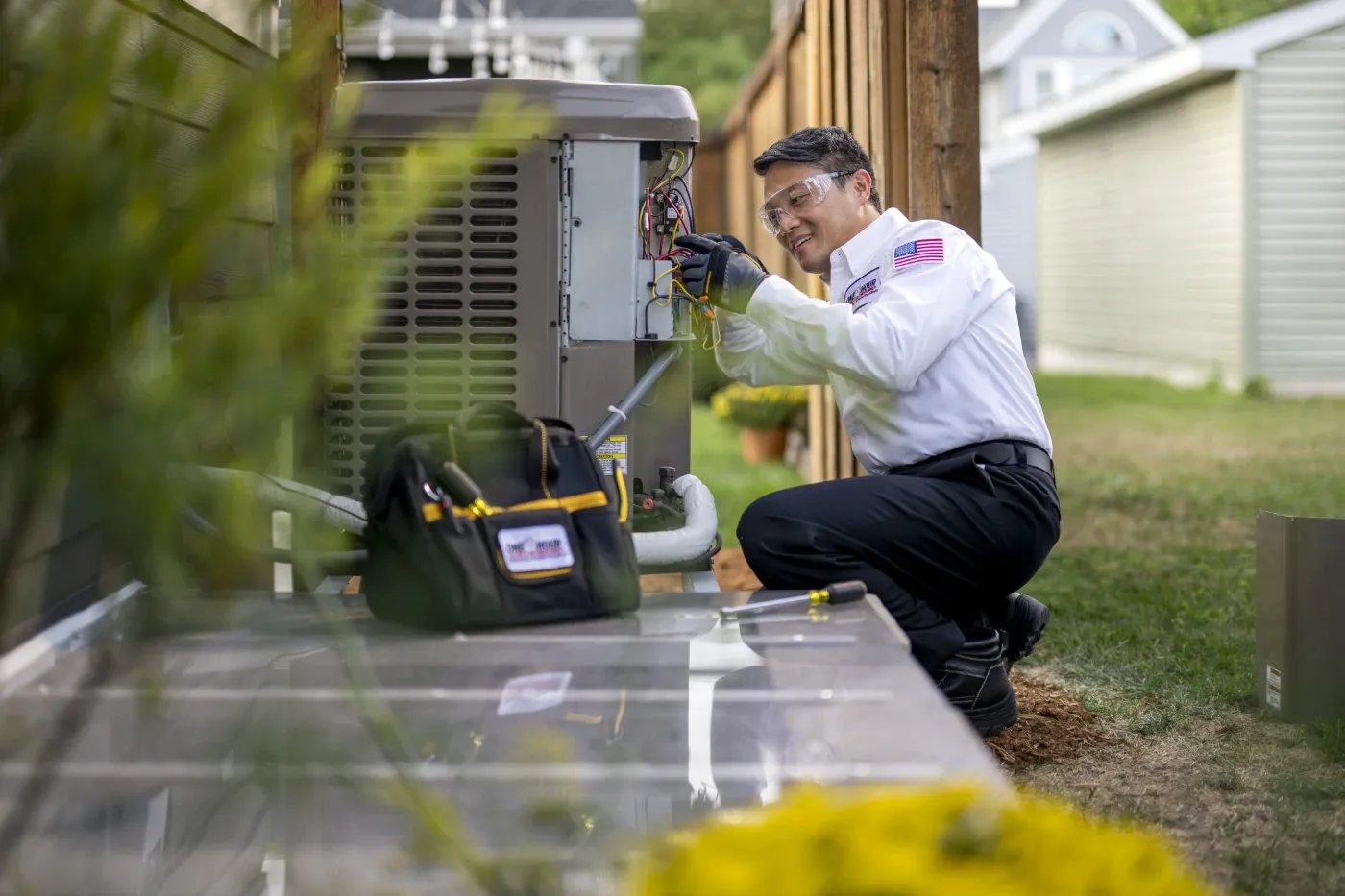
Central air works differently. A split AC system removes heat from indoor air through a refrigerant cycle. Refrigerant is the heat-transfer fluid inside the system. The evaporator coil inside the home absorbs heat, and the outdoor condenser releases it outside. The result is a closed-home cooling setup that gives much tighter control over indoor temperature. That matters in Ogden because local weather is not one uniform pattern. Conditions near the valley floor around 4,300 feet are different from the East Bench around 4,500 to 4,800 feet, and both are different from the Ogden Valley above 5,000 feet near Pineview Reservoir.
A real load calculation matters in this market. Manual J is the industry method used to calculate how much heating and cooling a house actually needs. It accounts for square footage, insulation, sun exposure, window area, air leakage, occupancy, and local design conditions. A ranch home near McKay-Dee Hospital in 84403 can need a very different cooling setup than a similar-size home in Plain City or a cabin-style property in Huntsville. That is one reason more homeowners are looking for air conditioning service Ogden UT from contractors who size systems for the home and location, not by copying whatever was already there.
Smoke, dust, and indoor air quality changed the value equation
One of the biggest local reasons for the shift is indoor air quality. A swamp cooler depends on outdoor air entering the house all day. That can be fine during a clean-weather stretch. It is a problem when wildfire smoke settles over Weber and Davis County, when dust blows across west-side neighborhoods, or when pollen counts spike in spring. Closed-home cooling through a central AC system gives filtration a real chance to work.
That point carries even more weight on the Wasatch Front because air quality is already a known issue in winter. From December through February, PM2.5 levels in Weber and Davis County often exceed the EPA 24-hour standard of 35 micrograms per cubic meter during inversion periods. PM2.5 means very fine airborne particles small enough to get deep into the lungs. Winter inversion is not the same thing as summer smoke, but it has changed how many local homeowners think about the house as an indoor environment. Once a family starts paying attention to filtration, outside-air cooling loses some appeal.
For that reason alone, many people who first call about air conditioning service Ogden UT are really asking a broader question: how to cool the home without bringing the whole outside environment indoors. Central air pairs with higher-MERV filtration, whole-home air cleaning options, duct improvements, and humidity control in a way rooftop evaporative systems do not. MERV is a filter rating that measures how well a filter traps particles. Higher MERV filters can capture smaller debris, though the system has to be matched correctly so airflow does not suffer.
Swamp coolers can feel uneven in older Ogden floorplans
Large parts of Ogden and nearby communities were built long before modern comfort expectations. Split-level homes in Roy, mid-century ranches in Washington Terrace, brick homes near the East Bench, and older properties in central Ogden often have hot back bedrooms, sun-loaded upper floors, and add-on rooms that never cooled evenly. Swamp coolers can struggle in those layouts because they cool by bulk airflow, not by precise air distribution.
Central AC, when installed with proper duct design, handles these homes far better. Manual D is the method used to design residential duct systems. It looks at airflow needs, duct sizing, static pressure, and supply-return balance so rooms actually receive the air volume they need. In plain terms, proper duct design helps prevent one bedroom from freezing while another stays warm. It also helps avoid noisy vents and weak airflow.
Many homeowners are surprised that the cooling equipment is only part of the job. Manual S equipment selection comes after Manual J and matches the calculated load to actual equipment performance. That matters because the same nominal system can perform differently depending on blower settings, duct resistance, and local conditions. In Ogden, a house on the East Bench with heavy afternoon sun can behave very differently from a shaded home near Ben Lomond foothills. Strong air conditioning service Ogden UT is not just about replacing a rooftop box with an outdoor condenser. It is about matching system design to the house.
Closed-window cooling fits how families actually use the house
Open-window cooling sounds simple until daily life is considered. Families want bedrooms cooled at night without outside noise. Shift workers near Hill AFB may need daytime sleep in a dark, closed room. Pet owners want indoor temperatures held steady while the house is empty. Households with allergy concerns want fewer outdoor irritants entering through open windows. Remote work changed expectations too. A home office in South Ogden or Layton has to stay usable through the hottest part of the afternoon, not just be tolerable.
That is where central air earns its place. It cools the house with windows shut, and it does it with far more control. Modern systems can be configured with two-stage or variable-capacity operation. Two-stage means the system can run at a lower level during milder demand and step up when needed. Variable-capacity means output can adjust through a wider range rather than turning fully on and fully off all the time. Those setups can improve consistency, reduce temperature swings, and help with humidity removal indoors.
An ECM blower often becomes part of that conversation as well. ECM stands for electronically commutated motor. In plain English, it is a blower motor that can adjust speed more accurately than an older fixed-speed motor. That helps with airflow balance, longer cooling cycles, and quieter performance. For homeowners comparing swamp coolers to whole-home AC, these are not luxury details. They are the difference between a home that feels controlled and one that always feels one weather shift away from discomfort.
The repair cycle on older evaporative systems gets old fast
Another reason residents are switching is simple fatigue. Older swamp coolers demand seasonal attention. Pads wear out. Water lines clog. Pumps fail. Floats stick. Rust develops in pans and housings. Rooftop access becomes harder with age. Spring startup and fall shutdown become another task on the home maintenance calendar, and the equipment still may not deliver the comfort the family wants by mid-July.
By the time a homeowner starts pricing repeated repairs, air conditioning service Ogden UT often becomes a replacement conversation. The decision is less about whether a cooler can be patched one more season and more about whether it makes sense to keep investing in a system type that still leaves the home noisy, dusty, and unevenly cooled. In many cases, central air becomes the cleaner long-term answer.
That does not mean every house needs the exact same replacement approach. Some homes already have a furnace and duct system that can support AC with modifications. Some need return-air work. Some need line-set routing that minimizes visual impact. Some need electrical upgrades. In two-story homes, zoning may be part of the discussion so upstairs and downstairs temperatures can be managed more evenly. Good local planning matters more than broad claims.
New refrigerant rules made 2025 and 2026 an active replacement period
There is also a technical reason this is an important time for cooling replacement in Northern Utah. New comfort-cooling equipment made on or after January 1, 2025 moved away from R-410A toward lower-global-warming-potential refrigerants such as R-454B. R-410A was the common refrigerant in many residential AC systems installed for years. R-454B is part of the newer generation of equipment. That change does not make older R-410A systems illegal to own. It does mean the market is in a transition period.
For homeowners replacing a swamp cooler with first-time central air, the refrigerant transition matters because it affects equipment availability, installation practices, and long-term service planning. For homeowners replacing an aging R-410A air conditioner, it can become part of the repair-versus-replace conversation. The best contractors explain the difference clearly and handle refrigerants under EPA Section 608 rules. Section 608 is the federal program that governs refrigerant handling, recovery, and technician certification.
This is one of the most shareable local facts in cooling right now: homes across Ogden, Roy, and Layton are making major AC decisions in the middle of an industry refrigerant shift. That is another reason demand for air conditioning service Ogden UT has become more urgent and more technical than it was a few years ago.
Swamp cooler replacement is not a one-size-fits-all installation
Replacing a swamp cooler with central air is often more involved than people expect, especially in older Weber County housing stock. It can involve furnace compatibility, blower capacity, return-air upgrades, condensate routing, thermostat wiring, electrical work, and roof or curb treatment where the old cooler sat. A contractor who simply quotes “a new AC” without discussing load calculation, airflow, and permit requirements is skipping the hard part.
Utah HVAC installation work falls under the state Specialty Contractor License classification S350, and full equipment replacement commonly requires a mechanical permit. Permit requirements can vary by scope and jurisdiction, so they should be confirmed for the specific job. That matters because permits and inspections help verify safe venting, electrical compliance, refrigerant practices, and code-aligned installation details. In places like Ogden City, Roy, Layton, or Clearfield, that process is part of a legitimate equipment replacement, not a nuisance to be avoided.
Mechanical quality matters even more in homes that sit in different elevation bands. The same floorplan near I-15 in the valley does not behave exactly like the same floorplan farther east near the Bench, and neither behaves like a home in Huntsville near Pineview Reservoir. Air density, sun exposure, overnight temperature swings, and winter heating needs all play a role. That is why careful contractors use Manual J, Manual S, and Manual D rather than matching the old unit or relying on square-foot shortcuts. When homeowners compare estimates for air conditioning service Ogden UT, those design steps often explain the price difference.
Why many homes pair AC work with duct and thermostat upgrades
A cooling replacement exposes issues that a swamp cooler could hide. Leaky ductwork, undersized returns, weak insulation at attic runs, and poor thermostat location all become more obvious once a central system is asked to keep the entire house stable. In West Ogden, Plain City, or Marriott-Slaterville, dust infiltration and attic heat can make those problems worse. In East Bench homes, solar gain can push one side of the house much harder than the other.
That is why many projects involve more than equipment alone. Common add-on work includes:
- Duct repair to stop air loss and improve room balance
- Return-air improvements so the blower can move enough air
- Thermostat relocation or control upgrades for better sensing
- Filtration upgrades that fit the blower and duct system correctly
- Attic or crawlspace adjustments that reduce heat gain at the ducts
These improvements often shape comfort as much as the condenser outside. A homeowner who has lived for years with a swamp cooler may assume any central AC will feel dramatically better. It usually does. But the houses that feel truly finished after the upgrade are the ones where airflow and controls were corrected too. That is why many detailed proposals for air conditioning service Ogden UT include duct and control recommendations instead of equipment-only pricing.
The local climate rewards systems that are sized correctly
Oversizing is one of the most common mistakes in residential cooling. Many homeowners believe a bigger AC will cool faster and therefore better. In reality, an oversized system tends to short cycle, which means it turns on and off too often. That can leave rooms uneven, reduce moisture removal, and increase wear on components. A swamp cooler owner switching to AC may be especially vulnerable to this sales pitch because faster airflow often feels like more cooling, even when actual comfort is worse.
Proper air conditioning service Ogden UT starts with sizing the load correctly, then selecting equipment that can deliver that load under local conditions. That point matters in neighborhoods from Farr West to Uintah because housing stock varies so widely. Brick homes hold heat differently from light-frame construction. Shade from mature trees changes cooling demand. Window upgrades matter. Basement finish levels matter. Ceiling height matters. Even orientation matters, especially where west-facing glass picks up long summer sun.
A well-matched system should run long enough to cool evenly and maintain steady indoor conditions. It should also integrate with the existing furnace or air handler in a way that protects airflow. In houses with older heating equipment, that may lead to a broader system conversation. In houses with newer furnaces, AC can often be integrated after confirming blower performance, coil fit, and duct capacity.
Why this shift is happening across Weber and Davis County, not just Ogden proper
The move away from evaporative cooling is not limited to one zip code. It shows up in North Ogden foothill homes that heat up late in the day, in Roy subdivisions where upper floors trap summer heat, in Riverdale homes near busy corridors where closed windows are preferred, and in Clearfield and Layton neighborhoods where homeowners want more complete filtration during smoke events. It also shows up in the Ogden Valley, though the cooling conversation there often overlaps with broader heating-system planning because elevation changes the year-round load profile.
Local roads and travel patterns play a role too. Homes near I-84, I-15, and US-89 may have stronger reasons to keep windows closed because of noise and outdoor air concerns. Houses near Snowbasin access routes or around Pineview Reservoir may have different seasonal occupancy patterns and higher expectations for all-season comfort. In each case, central air answers a lifestyle need that swamp cooling often cannot meet.
That broad shift is why air conditioning service Ogden UT now sits at the center of many home-comfort upgrades in Northern Utah. It is no longer viewed as a premium add-on for a few houses. It is increasingly seen as the normal cooling standard for homes expected to stay comfortable, cleaner, quieter, and easier to manage.
What experienced local evaluation actually looks like
When a contractor evaluates a swamp cooler-to-AC conversion correctly, the conversation goes deeper than equipment brand or a single efficiency label. The job starts with the house, then works outward to system design and code requirements. The strongest evaluations usually address:
- Load calculation based on the home’s actual cooling profile
- Duct capacity, return-air adequacy, and airflow restrictions
- Compatibility with existing furnace or air handler equipment
- Refrigerant-era planning, including the current R-454B transition
- Permit, inspection, and installation details specific to Utah work
That process is why many central air proposals are not interchangeable. Two contractors can look at the same home in 84414 or 84067 and produce very different recommendations. One may be pricing a box change. Another may be pricing a whole cooling system that actually solves hot rooms, weak airflow, and filtration limits. Homeowners comparing estimates for air conditioning service Ogden UT should expect those differences.
Where One Hour Ogden fits in that local shift
For homeowners ready to replace a swamp cooler or add central cooling, One Hour Heating & Air Conditioning of Ogden serves Weber County, Davis County, and the surrounding Northern Wasatch Front with AC installation, AC replacement, AC repair, ductwork, indoor air quality, thermostats, and emergency service. More details on system options are available through the company’s air conditioning service Ogden UT page.
One Hour Ogden is an independently owned and operated One Hour franchise led by Matt McFarland. The company serves Ogden, Roy, Riverdale, Washington Terrace, North Ogden, South Ogden, Pleasant View, Farr West, Hooper, Layton, Clearfield, Huntsville, and nearby communities. Its technicians hold EPA, RMGA, and BPI certifications, and the business is Utah Licensed, Bonded, and Insured. For homeowners weighing a major cooling change, that local footing matters.
Near the end of the process, what often separates one company from another is how the work is handled once the appointment is booked. One Hour Ogden offers 24/7 availability, the Always On Time Or You Don’t Pay A Dime guarantee, and a StraightForward Pricing approach that presents options before work begins. The company also backs materials, labor, and craftsmanship with a 100 Percent Satisfaction Guarantee for up to two years from the date of service. With 568+ Google reviews and a public 5-star rating display, it has become a known local choice for households comparing air conditioning service Ogden UT after years of making do with rooftop evaporative cooling.
For property owners in Ogden, 84403 East Bench neighborhoods, 84040 Layton, 84015 Clearfield, or 84317 Huntsville who are done with open-window cooling and seasonal swamp cooler upkeep, One Hour Ogden can evaluate the home, review duct and equipment needs, and provide options for air conditioning service Ogden UT. Appointments can be scheduled at (385) 485-6550.